


Notes on Resurge 2025
Violet Jordan
At Resurge, eight artists wrestle with ideas of self, contemporary queer culture, othered and controlled bodies, and the threat that our existence poses to fascist thought. The two nights of performances were all orchestrated together. Performances existed in conversation with each other. Each night flowed with changing artistic visions leading us through a collective of ideas.
A journey of self-acceptance through the wisdom of a mystery man, Hesam Salehbeig’s Formless: An Introductory Discourse on Crazy Wisdom sets the tone for the festival by dancing around subject matter. Salehbeig’s disembodied voice welcomes us into the space to see the artist bathed in a projection of themselves, dressed in whites and golds. The space is filled with the sounds of muffled wind and scents of jasmine. Bells ting as Salehbeig chants. They spend the majority of the performance chanting and telling us a story of their time with a man who taught them how to become formless. Their story is steeped in Vedic thought, magical thinking, and feels Hasem’s performance was a magical suggestion on actualizing their transfeminine form. During the wandering monologue, much of what they tell us feels placeless, as if they are realizing it as they speak to us.
A wall moves and reveals Camila Arévalo arching their stomach upwards. She is painted red and has candles sticking out of her body. There is a pool of water surrounded by votives with red candles. A bucket of apples sits near the pool. The air has shifted to be confrontational, sexual, visceral, and dark in contrast to the previous light, wandering meditation on self. Hasem lights the candles and kneels next to her. Puñal y Herida is an act of becoming a conduit to the overlooked feminine. We see her hold herself up as the candles drip down. Overhead, we hear harsh whispered chants. The femininity referred to in this piece is not just Arévalo’s but is something divine and outside of any individual. We are invited to light candles, place them in the pool, and take a bite of an apple. In this moment, we have an opportunity to see the piece in a much more intimate light.
Kezia Waters channels a much louder spirit in Exodus. Entering in short curls and a banana skirt to the tune of a piano player, they greet the audience with a voice that is inviting and excited. They dance around the set singing and swinging a jar filled with blood. The performance is confrontational; it engages with a violent history through storytelling, irony, and visceral imagery. Pouring the blood on the American flag, Waters sings that they are “Proud to be an American”. The actions develop and fall apart, deconstructing Waters’ self - and ultimately the spirit of Josephine Baker that they are channeling. They ask us to engage with America’s history of racialized violence that pervades black Americans’ lives through a whirlwind of hysteria performed in a flash of artistic presence.
The final performance of the night returns to slowness. Ále Campos and Sungjae Lee circle the stage, shimmering in the light in Orbital. With sound from Young Joon Kwak’s Gitter manifesto delving into the social connotations of glitter, ranging from wealth, ecological terror, and queer resilience, we see both performers practice becoming that glitter. With no use of any actual glitter, they both have found ways to redirect light on the audience and fill not only its physical characteristics but also engage with glitter’s storied past. Campos starts in the center, sitting on a mirror and slowly painting every inch of their body with silver paint. During this, Lee slowly orbits Campos. Covered in tiny mirrors, they spin and stretch and slowly project the light from above outwards. Spending the entire length of the manifesto in slow movements, the performance switches once it is over. Lee changes places with Campos, and ‘Blind” by Herecules and the Love Affair plays. Upbeat and seductive dance finishes out the performance. Campos and Lee deliver a performance of the research on what it means to be reflective and all that entails.
The two nights flow in a similar way. Performances oscillated in tone and played off of each other. We see artists moving us into the next piece. Imagery changes quickly. Sounds, scents, and presence completely shift from one to the next. At times, we don’t get rest, one performance playing into the next.
The second night begins much like the first: outside of the space. Efrén Arcoíris spent the majority of their day in the front windows inside of a pink, ethereal tableau to prepare for her performance, Hypnos Colombina. Arcoíris had space to lounge and create. As the audience arrived, they began to perform. Music played on the street where we watched. She performed to the glass that encased her. Starting with slow movements constructed of her own poise and dramatic crumbling. Like a girl trapped in a music box, she reacts to the changing melodies. The performance feels like the audience looking in on something existing outside of our time and space. Our attention is called to three cups marked with three tarot cards - the High Priestess, the Empress, and the Queen of Swords. We are invited to cast coins into the cup of our choosing. The work works with ritual and story telling using a language that feels familiar yet obscure. Her tableau vivant is a fantastical act of connecting with canon while creating her own. We end by being guided into the space by Arcoiris to see Rose Hernandez sitting in a mostly dark gallery.
Rosé Hernandez presents herself with dripping balls of ice, red hands, and harsh lighting for her interactive work Tender, The Wound. As the audience settles in, she gazes back at all of us. Her makeup is extreme, a grotesque mixture of harsh white and dripping red. As we take her in, she points to an audience member. An acolyte brings them to sit across from the artist. They are asked if they would like to ‘touch or be touched.’ Hernandez swaps between handing ice off and touching audience members with her cold hands, and having her hands held back so the audience member can touch her. Pointing towards her own emotional vulnerability and touch starvation, Hernandez forms a connection with different audience members. The fifth time someone chooses to touch her and gives her a deep hug, we see a tear glimmer under the lights. She goes through interaction after interaction, allowing us to watch this process and how each gesture stacks on top of the next one. The performance is as much a gesture of vulnerability for her as it is for us.
Overhead, Amari Amai greets the audience, trying to get our attention by asking for individuals' names. We face a stage, unsure of where Amai is located. When he arrives, he states, “Welcome to the White Man’s Heaven”. This begins Sky Fulla Angels. Amai’s performance is a theatrical monologue - an exercise in naming and re-naming. The power that naming something holds - the power to obscure, the power to remember, and the power to rewrite reality. They question if their own transition and eventual re-naming results in the death of the black girl they once were. They name specifically how the white man uses naming to maintain white supremacy. Amai spends the second half of the performance ruminating on pain and human suffering. He names his students, ones he's lost to the police state, ICE, and the current genocide in Gaza. The performance asks us to name the pain of the world as a way to engage with it - to dissect the shroud that white supremacy places over the pain of those it wishes to colonize. Ultimately, Amai asks us to grieve with him for those whose names have been obscured.
Érika Ordosgoitti takes us directly into the bureaucratic surveillance state that is currently occupying America in Canto a la Madre: Variaciones sobre el Zamuro. A performance of withholding information, Ordosgoitti has the audience playfully engage with temporary tattoos of guns, clocks, basketball logos, and more. As the audience approaches, further information slowly leaks out about what these are. Information direct from ICE on how to identify gang members for deportation includes the details of the very tattoos we are playing with. They offer us clothing of the same variety. The entire time, we are recorded and projected for all to see. As we all become further incriminated in fitting the descriptions of the gang members Ordosgoitti and their assistants are searching for, they begin choosing different members of the audience to take to the front of the stage. Ordosgoitti exposes the terrifying farce that is the process of identifying someone as needing to be deported. Qualifications that are so general that many can be made to fit if needed. One member is removed and taken from our sight. We watch on a screen as they are taken to a second location. We are left with strange and uncomfortable feelings. Guilt. Fear. Confusion. Much of what unfolded before us was rooted in an incredibly contemporary reality - something that we were just complicit in by witnessing. The tension breaks with a poem of grief.
While Resurge was a festival highlighting queer performers, it contained so much more. Performances touched heavily on the intersections of identities and how that plays with the state we all are in. As an audience, we were asked to do much more than simply celebrate queer life, but to engage with difficult feelings from our relationship to white supremacy, the active decline of freedom in America, and the ways queer bodies are socially subjugated. Performances swung hard and dug deep into the lives and fears of the performers, and were heartfelt, honest, and had a deep desire to ask audiences to truly confront uncomfortable realities.
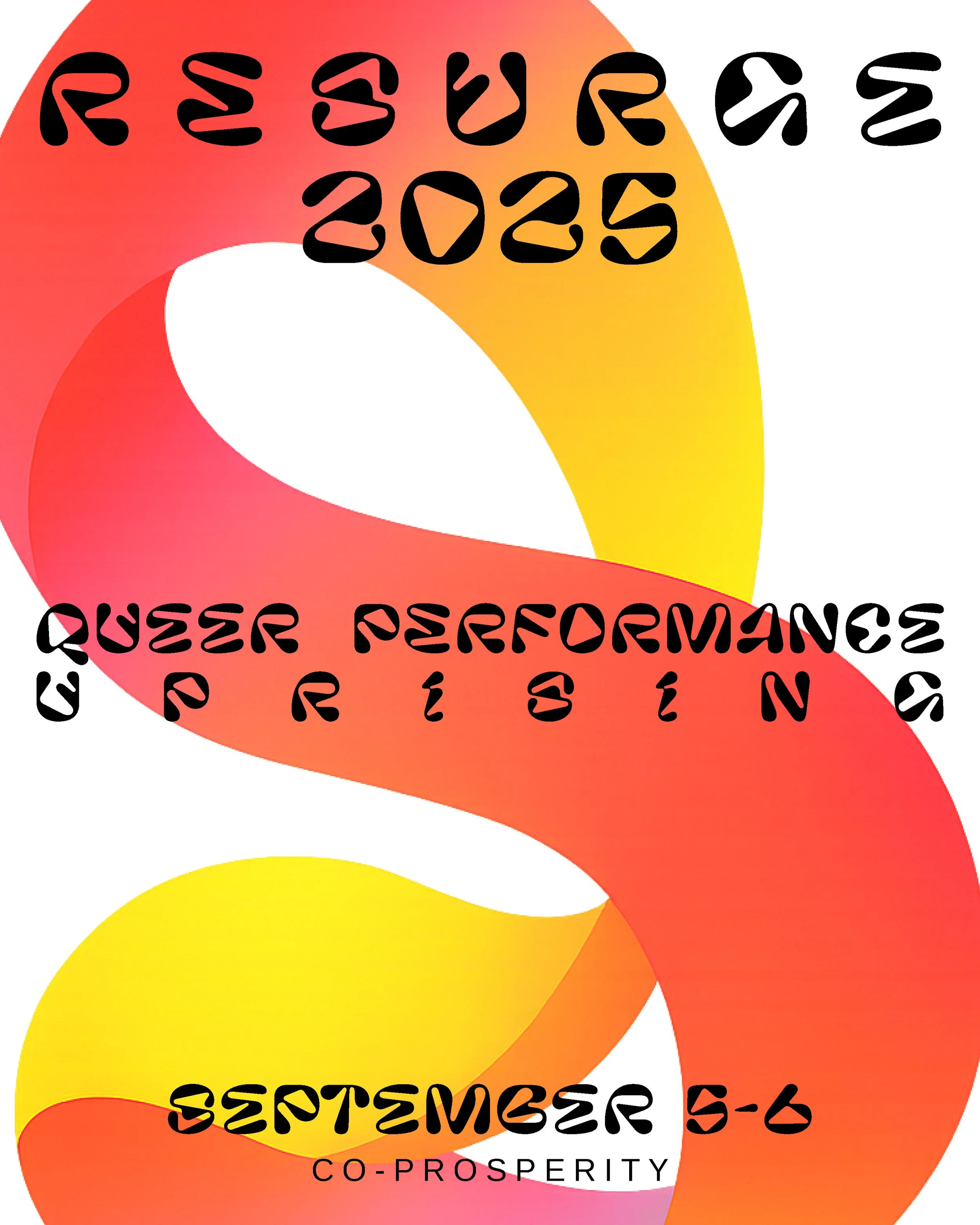
Resurge Chicago: Queer Performance Uprising —
September 5–6, 2025 · Co-Prosperity, Chicago
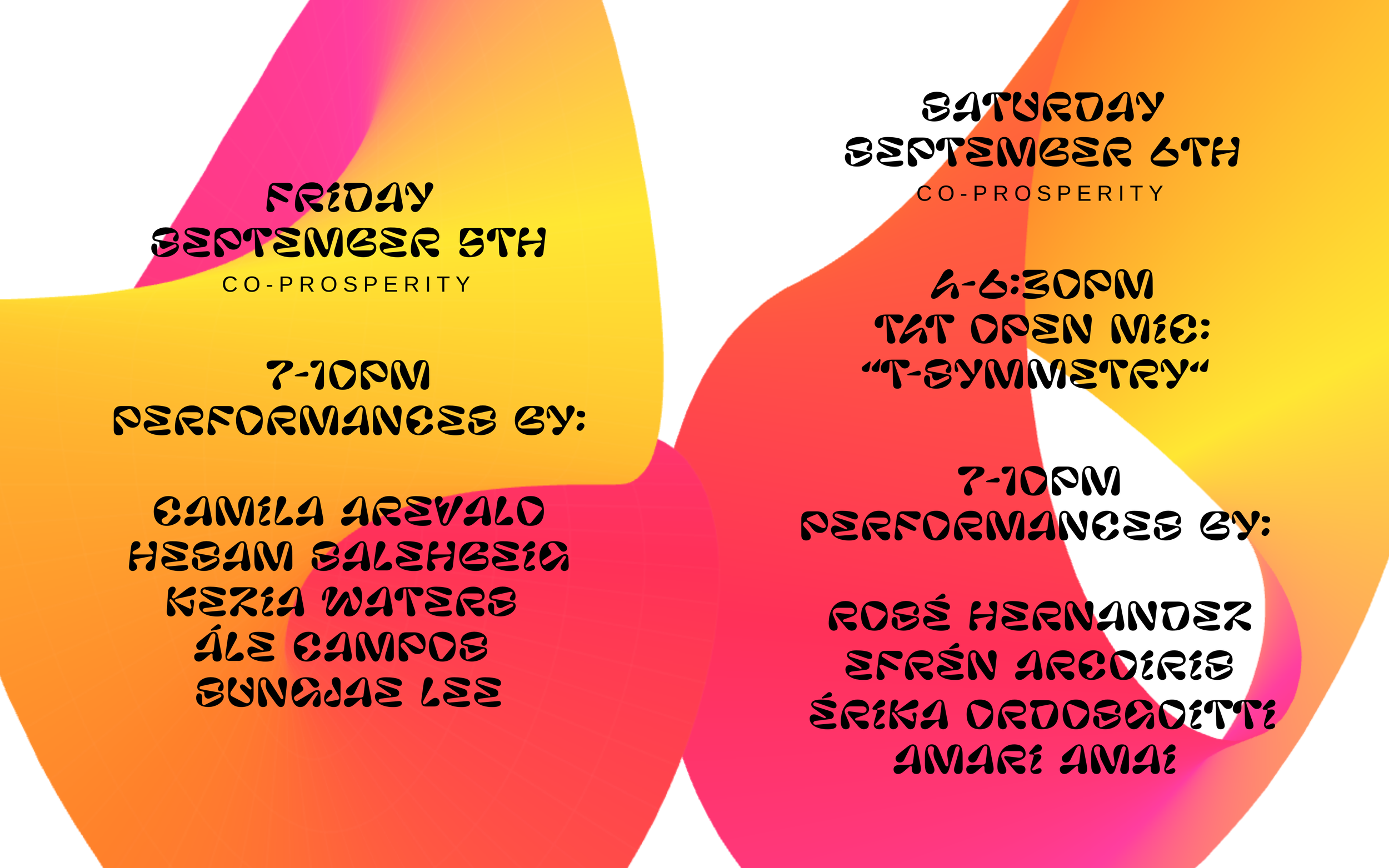
Schedule —
Fri, Sept 5 · 7–10 pm — Performances
Sat, Sept 6 · 4–6:30 pm — T4T Open Mic
Sat, Sept 6 · 7–10 pm — Performances
Resurge is launching a response from the Co-Prosperity Programming Council to the recent hits Chicago’s experimental performance ecosystem has experienced since COVID.
Earlier this year we collaborated on the Bridge Performance Incubator (with Hyde Park Art Center), which culminated in June 2025 showcases at Co-Prosperity. Resurge builds on that momentum, and we hope both programs return annually to keep space, resources, and visibility to the Chicago performance community.
Featured Artists —
This year’s lineup brings together a formidable group of artists working across movement, ritual, drag, installation, storytelling, and audience-embedded performance. Expect durational transformations, shimmering acts of queer joy, embodied histories, intimate exchanges, and radical reimaginings of self and community.
2025 artists include:
Efrén Arcoíris · Kezia Waters · Ále Campos · Sungjae Lee · Amari Amai · Camila Arévalo · Hesam Salehbeig · Erika Ordosgoitti · Rosé Hernandez
Detailed Schedule:
Fri, Sept 5 · 7–10 pm · Performances by:
Camila Arevalo, Hesam Salehbeig, Kezia Waters, Alé Campos + Sungjae Lee (with music from Young Joon Kwak)
Sat, Sept 6 · 4:00-6:30 pm
T4T Open Mic (SIGN UP REQUIRED)
come perform a short queer something on a stage presented by Genderfucked Productions!
10 folks will be selected prior to show day, prioritizing artists of color in an effort to advance racial equity within our trans community. Performers will be notified via email the week of the performance.
MASKS ARE REQUIRED when not performing.
If you are not selected, DON'T WORRY, you may still have an opportunity to perform!! There will be a designated amount of time for ~wildcard~ performers who will be selected at random on the night from those who show up and still want to get on stage.
T4T is an intentional space for transgender, nonbinary, and gender non-conforming artists to share their creative craft(s) with us on stage! We hope you join us for a night full of laughter, music, and art that pushes beyond the binary!
7–10 pm · Performances by:
Rosé Hernandez, Efrén Arcoiris, Érika Ordosgoitti, Amari Amai
Artists Bios —
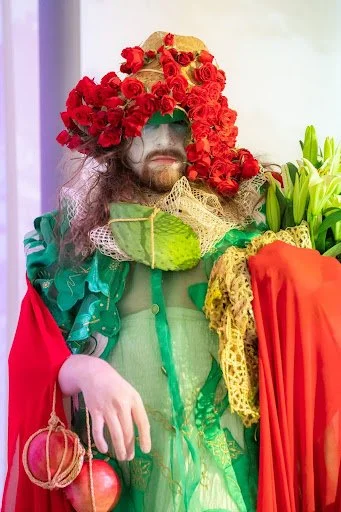
Efrén Arcoíris (they/them) is a Chicago-based artist and educator of mixed Mexican and Appalachian roots. Their interdisciplinary practice—spanning performance, installation, sculpture, and drawing— weaves together ancestral histories, queer existence, and radical imagination into a vibrant, living tapestry.
Exploring dynamic landscapes between the spiritual and the mundane, the internal and external, the natural and artificial, Arcoíris uses their body and spirit to activate objects and environments into contemporary folkloric narratives.
They are the co-founder of Burning Orchid, a performance art collective creating dance and film works since 2015. Arcoíris has performed and exhibited internationally across Mexico, Russia, and Japan, with. appearances at the Museum of Contemporary Art Chicago, Miami Art Basel, Museo de la Ciudad de México, Post-Butoh Performance Festival in Chicago, and the Shiryayevo Biennale in Samara, Russia.
—
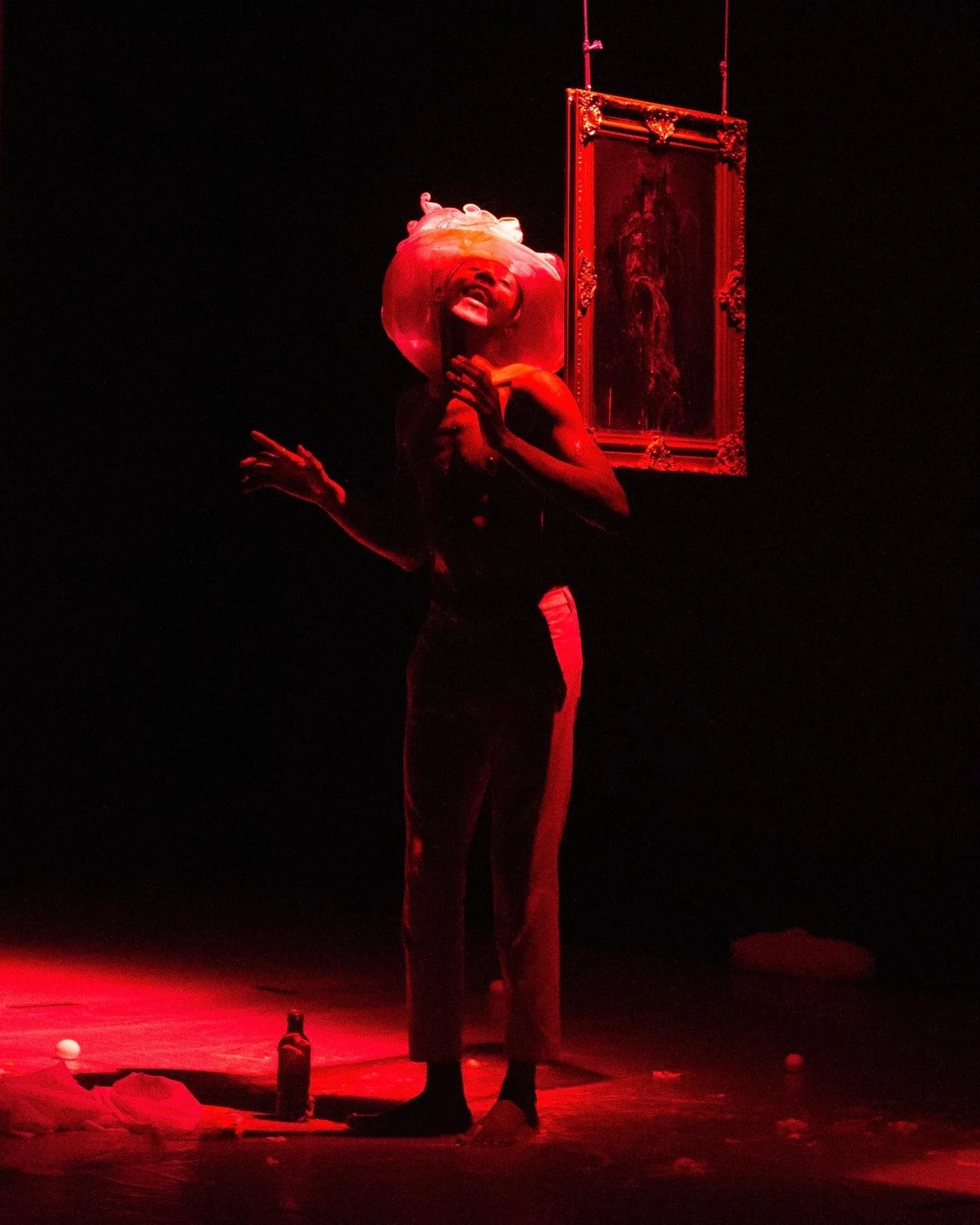
Kezia Waters is a Storyteller/ Performance Artist located in Chicago, IL. Their work lives between the worlds of ethnography, folklore, ritual and the living archive. Through surrealism they try to find things that are Holy, Whole, and Holds. A humanist fairy. They have performed in the Biennale d’art Performative de Rouyn-Noranda of Canada, Dazibao Gallery in Montreal and Recto- Verso in Quebec City and numerous galleries around Chicago. Kezia was a 2023 In-Session Fellow at ThreeWalls, studying the Performance and Folklore of Zora Neale Hurston and also an Adjunct Professor of Acting & African American Theatre at Central State University in Wilberforce, Ohio. Kezia is also a Jeff Award nominated Theatre Director.
—

Ále Campos (b. 1994, Los Angeles, California) is a multidisciplinary artist and performance maker whose elastic studio practice is anchored in the vernacular of drag and their persona, ‘Celeste’. They generate live performance works that are often rhapsodic and mediated by technology, unfolding from and into the mediums of sculpture, sound, text, video and installation. Their work tends to dissect perception and the relational, both aspects that are inherent to the medium of performance. Drag is a conceptual framework through which they consider performance making, specifically the stage and its borders, the malleability of the gaze, how to de/construct an image and how to handle time. Drag is a necessary instrument for them to step into liveness. It is their approach to challenging how we are witness to ourselves and each other, on and off stage.
They received a BA from Bennington College (2016) and an MFA in Performance at The School of The Art Institute of Chicago (2022). Their work has been shown at the Hyde Park Arts Center, NO NATION, Comfort Station, Heaven Gallery, Ruschwoman, Chicago Artists Coalition, Jude Gallery, Roots & Culture, Elastic Arts, SITE/less (Chicago, IL), Lane Meyer Projects (Denver, CO), Collar Works (Troy, NY), September Gallery, The 405 Project (Hudson, NY), Kunsthalle Darmstadt (Germany), SS Gallerie (CDMX), BMOCA (Boulder, CO), Pamplemousse Gallery (Richmond, VA), Public Space One (Iowa City, IA), Crab Shack x Fjord, and Vox Populi (Philadelphia, PA). They’ve attended ACRE Residency and are a recipient of the 2022 James Nelson Fellowship Award at SAIC and the City of Hudson’s Tourism Board Grant (2021). They were a 2023 BOLT artist-in-residence at the Chicago Artists’ Coalition and were named one of the ten New City 2023 Breakout Artists of Chicago.
They are currently a lecturer in Performance at SAIC and are an active, participating member of the drag and nightlife community in Chicago, currently holding the title of resident performer / co-producer of Rumors, a monthly event that showcases some of the city’s premiere performers and DJ’s.
—

Sungjae Lee (he/they; Chicago, IL) is a visual artist, educator, and writer whose practice centers around the visibility and varied representations of queer Asians. He has presented his works globally in South Korea, Sweden, Canada, New Zealand, and the US. He has had residencies at ACRE, High Concept Labs, HATCH Projects, Fire Island, Vermont Studio Center, Millay Arts, and Yaddo. He was selected for 2025 Queer | Art | Mentorship, the 2024 Chicago Artadia Awards Finalist, 2022-2023 Kala Art Institute Fellowship, Franklin Furnace Fund 2021-22, and the 2020 AHL Foundation Artist Fellowship. He received his B.F.A. in Sculpture from Seoul National University and M.F.A. in Performance Art from The School of the Art Institute of Chicago.
—
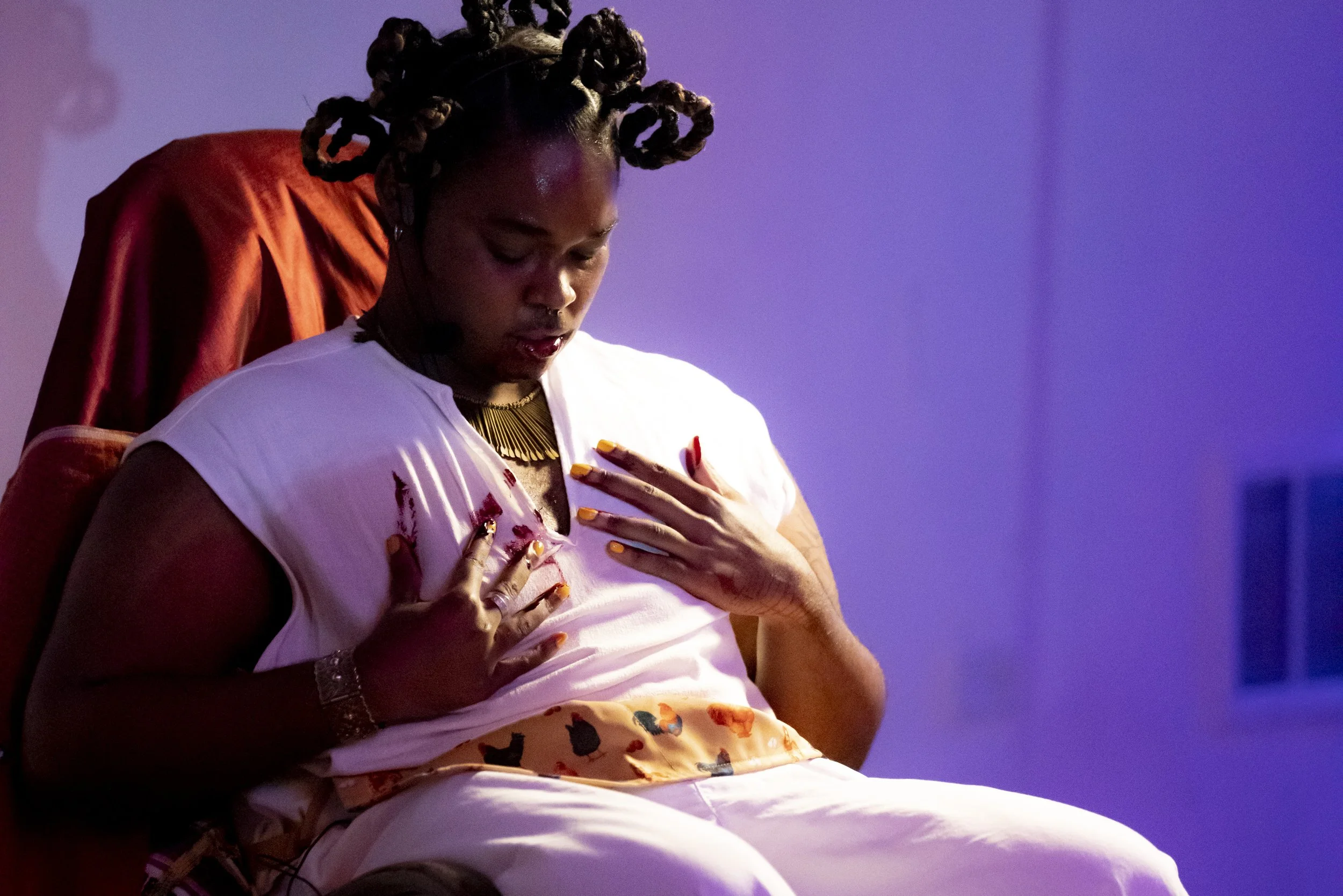
Amari Amai is a Black transmasculine storyteller and worldbuilder born and raised in Chicago. As a Great Migration baby with roots in Jackson, Mississippi, Amari’s work is rooted in oral tradition and ancestral embodiment on and off the page, using poetry, folklore, soundscapes, and performance to bend time and immortalize the lives of the disappeared and forgotten. Their work has received support and fellowships from Tin House, Periplus Collective, Sundress Academy for the Arts, Hyde Park Art Center, The Watering Hole, Vermont Studio Center, and Earthseed Black Family Archive Project. Amari is the founder of Crossroads Writers Collective, a communal writing group for Black queer folks based in Chicago. As a 2025 Pushcart Prize and 2025 Best Small Fictions Nominee, they are currently at work on their debut poetry collection with an accompanying series of performances. Find out more at amariamai.com
—

Camila Arévalo (San Antonio - Colombia, 1993) is an interdisciplinary artist, curator and animal working at the intersection of performance art, video, sculpture and Installation. Her work creates alternative and even fictional narratives, post-human mythologies, and ways of subverting domination hierarchies starting from the body. She exposes her position as an artist in relation to discussions on gender, trans-feminism, sexuality, desire, and identity politics; the discursive construction of history, the illusion of post-colonialism and the metaphysical belief in humans' natural position of privilege over the planet.
—

Hesam Salehbeig (they/them) is an Iranian artist based in Chicago, working across architectural theory, time-based media, and performance art. Their practice explores the intersections of body, gender, psyche, sound, and space through site-specific narrative experiences that investigate the layered entanglements between internal states and external environments. Combining architecture, multimedia installation, storytelling, and performance art, Salehbeig creates immersive, participatory works that shift audiences from passive spectatorship to active engagement and collective embodiment. These works empower participants to play a more creative and collaborative role in their environment, fostering psychological transformation, emotional awareness and resilience .
—
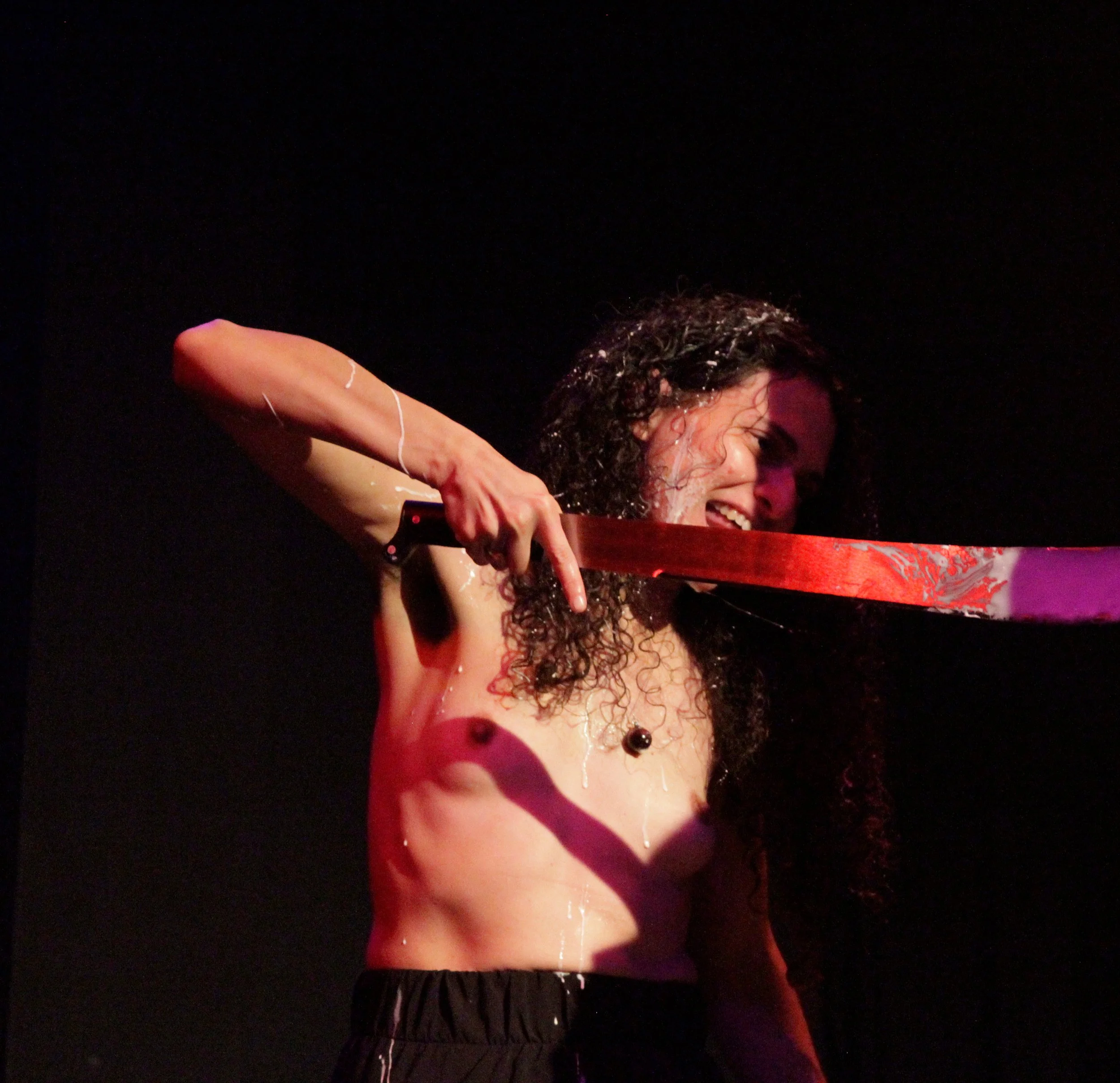
Erika Ordosgoitti (Caracas, 1980) lives in Chicago, Illinois. A performance and audiovisual artist and poet, Ordosgoitti holds a degree in Arts with a specialization in New Media from the Instituto Universitario de Estudios Superiores de Artes Plásticas Armando Reverón in Caracas. Over the past 25 years, their research has focused on the study of the concept of freedom in relation to art.
Ordosgoitti is known for their site-specific interventions in public spaces, called "fotoasalto" (photo-assaults), which are performative declarations of freedom meant to bear witness to its fleeting existence and inspire new acts of disobedience. Risk is a significant element in their artistic practice. Their work explores the mechanisms of power that operate on behavior, using her own body as a fundamental signifier and contested space, recognizing it as the primary target of power and, therefore, the primary vehicle for freedom.
—

Rosé Hernandez is a visionary artist, choreographer, educator, and arts administrator whose multidisciplinary practice moves through the intersections of spirituality, Latinx culture, and transgender experience. Her work engages in diasporic reclamation, exploring ancestry, belonging, and survival through a post-colonial lens.
Rosé’s performances are living rituals — visceral, resonant acts that reshape the atmosphere. Her body becomes a threshold, a point of crossing where energies converge, stirring the room and summoning the presence of spirit and ancestral memory. In each work, she moves with the audience as witness, sharing in the charged, unspoken power of ritual performance.
As co-director of Burning Orchid, a performance collective dedicated to pushing the boundaries of form, Rosé collaborates to craft immersive experiences that challenge societal norms and honor the multiplicity of human expression. She also co-piloted the Bridge Performance Incubator with Sofía Gabriel at the Hyde Park Art Center, in partnership with Co-Prosperity Sphere, a platform for performance artists to develop new works in dialogue with curators, peers, and audiences.
Her work has been presented internationally at the Museo de la Ciudad de México, Museum of Contemporary Art Chicago, Museum of Contemporary Art Los Angeles, and Shiryaevo Performance Biennale in Russia, as well as in notable venues and festivals including Defibrillator Gallery, Movement Research at the Judson Church, Links Hall, the Chicago Cultural Center, Rapid Pulse International Performance Art Festival, and Human Resources LA.
—
About Resurge Chicago: Queer Performance Uprising
Resurge is a gathering of queer performance artists from across Chicago, presenting bold, risk-taking work. The festival honors queer ancestors, amplifies queer futures, and sparks new possibilities for live art in a city where experimental performance spaces are increasingly under threat.
Resurge was conceived of and organized with the hard work of volunteer Programming Council members Rosé Hernandez, Bobby Luck, Mark Jeffery and Ruby Que.
Resurge is partially funded by:
The LGBTQ Community Fund, an operating grant from the Elizabeth Morse Charitable Trust with support from the Chicago Community Trust.
The Reva and David Logan Foundation
and the Joyce Foundation
No “taxpayer funds” were used to fund this queer magic, despite recent homophobic media attacks to the contrary.